Publications
D3.1. Regional Agricultural Reclamation Suitability Maps
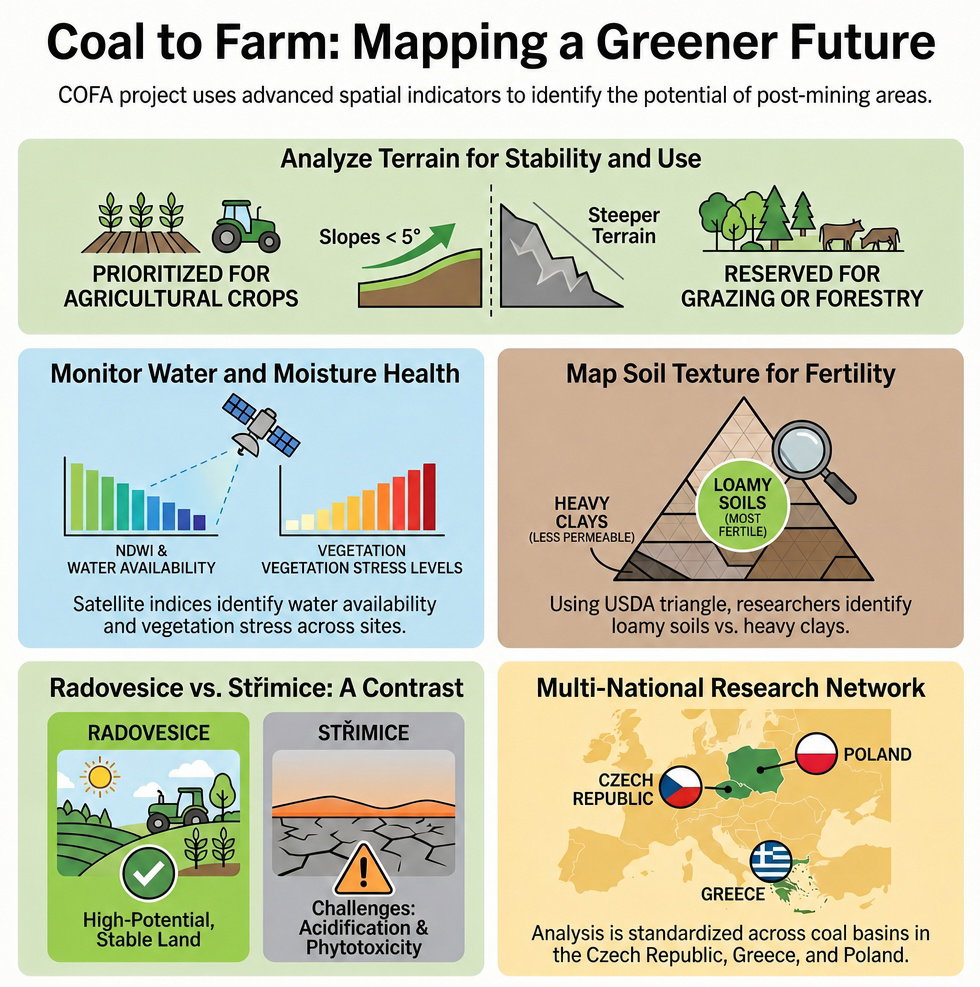
Deliverable D3.1 establishes a methodological framework for identifying post-mining areas in Czechia, Greece, and Poland that are most suitable for agricultural reclamation. This document introduces a multi-layered selection process that evaluates "main indicators" -including terrain topography (elevation and slope), land surface temperature, and water conditions - alongside "supplementary indicators" such as soil texture, vegetation vitality, and human pressure.
The practical value of the report lies in its detailed suitability maps and site-specific analyses derived from Digital Elevation Models (DEM) and high-resolution remote sensing data (Copernicus). By utilizing indices like NDVI and NDWI, the document provides a layered basis for evaluating the potential of post-mining landscapes for low-carbon agricultural practices and energy crop production.
D3.2. Soil Dysfunction Classification Report
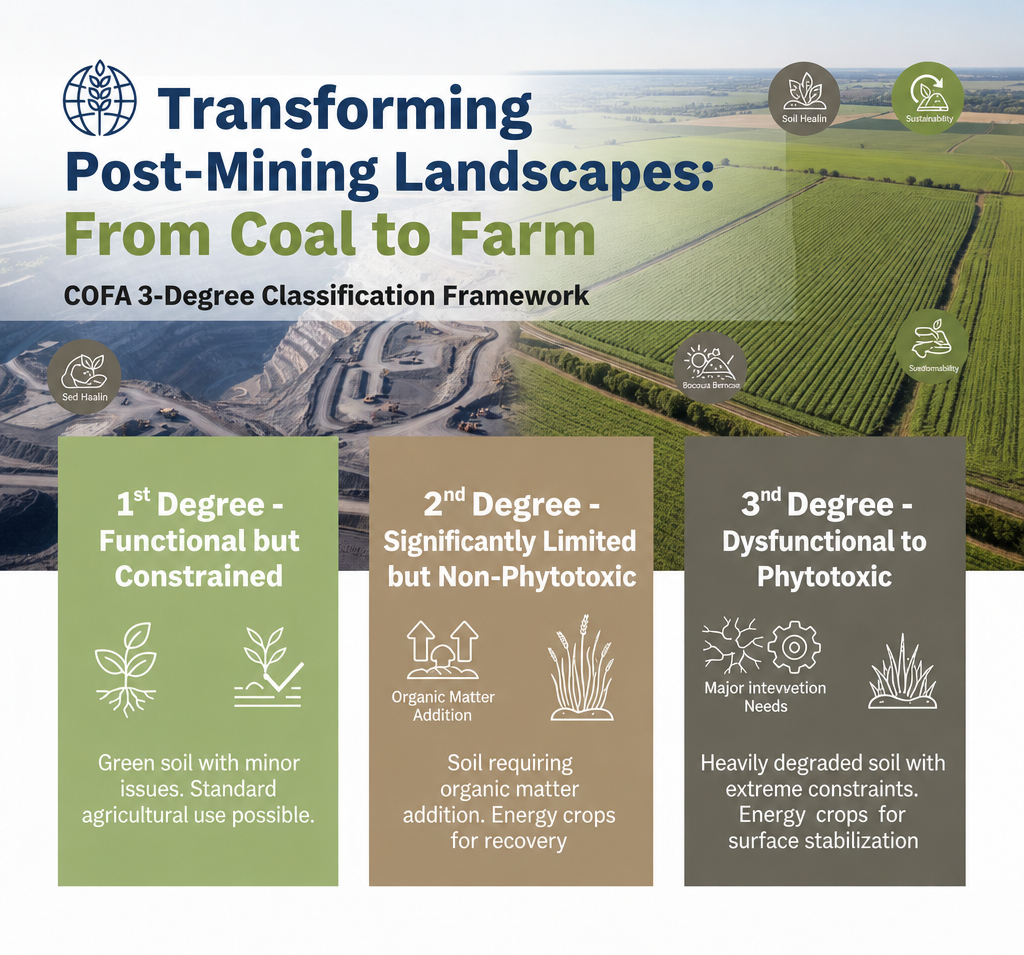
Deliverable D3.2 provides a comprehensive overview of soil dysfunctions affecting post‑mining landscapes in the Czech Republic, Poland, and Greece, and introduces an integrated framework for classifying their severity in relation to agricultural reclamation potential. The findings underscore that soil dysfunctions, whether physical, hydrological, chemical/toxicological, or biological - rarely occur independently. Their interactions shape both the feasibility of agricultural production and the selection of appropriate reclamation pathways. The proposed three‑degree classification offers a clear, actionable structure for interpreting site conditions: from mildly constrained but functional soils, through significantly limited yet non‑phytotoxic substrates, to severely degraded or phytotoxic areas requiring major interventions.
D3.3. Guidelines for Soil Regeneration and Reclamation Practices
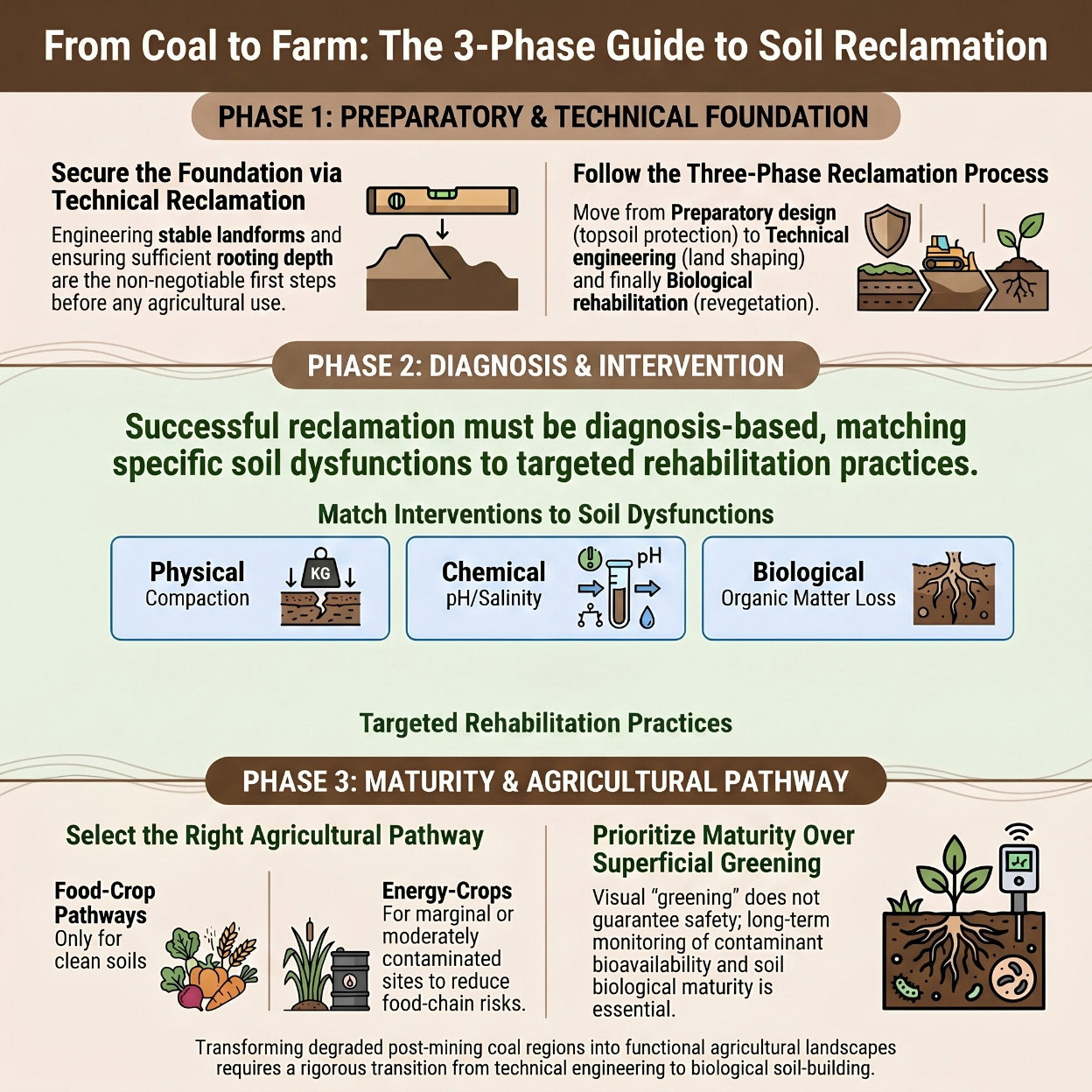
Deliverable D3.3 compiles and evaluates soil regeneration and agricultural reclamation practices specifically tailored for coal and lignite post-mining regions in Poland, Czechia, and Greece. The report shifts the focus from simple land stabilization to long-term soil health by matching technical and biological interventions to specific diagnosed dysfunctions, such as compaction, acidity, or biological depletion. It identifies various reclamation pathways - including food, fodder, and industrial crops - while establishing high standards for food safety, fertility, and hydrological functionality. A central component of the document is an operational catalogue of practices organized into ten categories, ranging from initial soil reconstruction to post-reclamation regenerative management.
D3.4. Suitability Assessment Report for Carbon Farming and Energy Crops
Deliverable 3.4 provides a comprehensive assessment of the suitability of post-mining landscapes in Poland, Czechia, and Greece for carbon farming and energy crop cultivation. The report details the physical, chemical, and biological soil parameters required for agricultural success while identifying technical challenges specific to mining sites, such as terrain instability, hydrological disruptions, and thermal hazards. The document establishes a methodological and regulatory framework for carbon farming, aligning practices with the latest EU standards and certification systems for carbon removal. A core component is the extensive analysis of suitable crop species mapping their agronomic requirements against the harsh conditions of degraded sites. Furthermore, the report presents thirteen diverse European case studies, covering everything from aromatic plant cultivation and experimental orchards to full-scale phytoremediation and integrated mining-agricultural operations.
D2.1. Comprehensive Project Overview Document
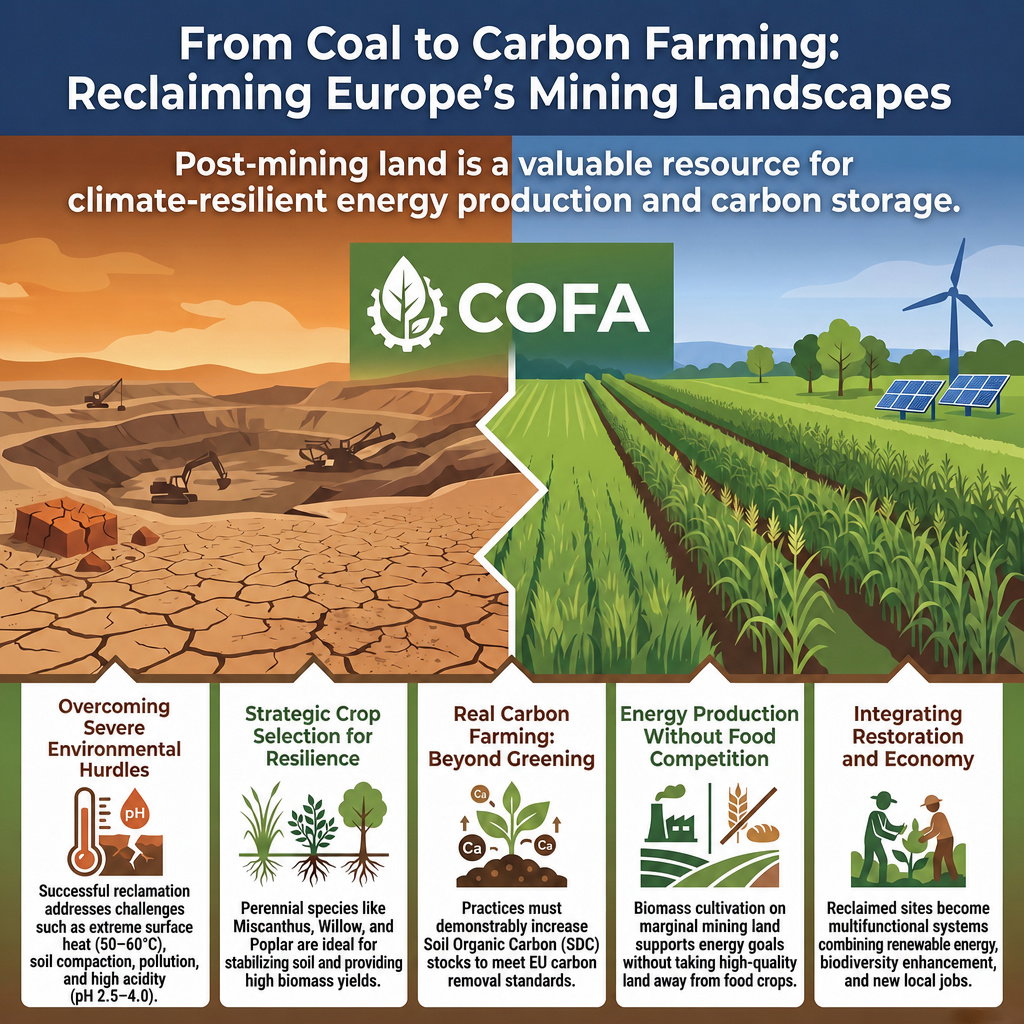
The document points out that standard land reclamation methods usually don't make these areas economically viable again. COFA takes a broader approach, addressing ecological, social, and regulatory challenges at the same time. The idea is to use carbon storage and biomass production to turn environmental problem sites into sustainable, productive land — in line with Europe's climate goals.
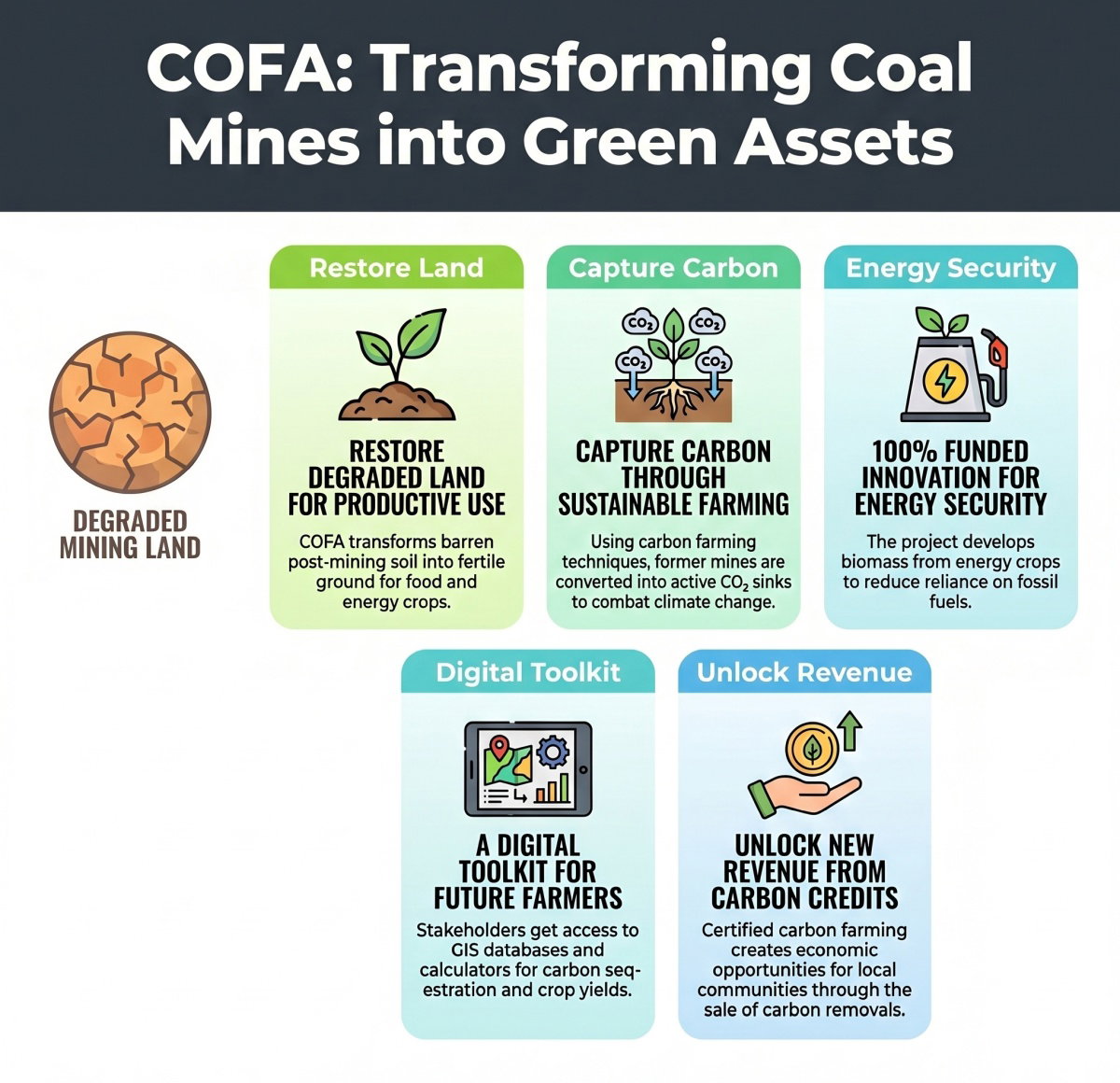
The core COFA output is an Agricultural Toolkit — a practical set of tools including maps, carbon farming calculators, and step-by-step guides. It is tested at sites in Czechia, Greece, and Poland. The toolkit helps local stakeholders figure out the best reclamation options and apply proper carbon farming methods.

Funded by the European Union. Views and opinions expressed are however those of the author(s) only and do not necessarily reflect those of the European Union or European Research Executive Agency. Neither the European Union nor the granting authority can be held responsible for them.